ASK – Social Media Marketing
Useful Links to Sites & Apps
ASK LMS
TRAQOM
ASK Survey
Google Review
Attendance QR
AI Text Tool
Qwen
Design Platform
Canva
Free Images
Pexels
AI Images
Gemini
Course Materials
- What people are searching for?
- Facebook Ad Library
- Free Images/ Videos:
- Google Tools:
- Research Tools:
- Webpage, Document and Slides
Sample of Project click here
You will need a facebook personal account to create a facebook business page.
You will need a facebook business page to set up a facebook business suite account.
Course Activities
Summary & Examples (for Learning & References ONLY)
What are some of the common social media platforms and its advantages?
The advantages and considerations of using some of the social media platforms listed below:
- YouTube
- TikTok
1. Facebook
Advantages:
– Large, diverse user base.
– Comprehensive ad targeting options.
– Supports various content formats (text, images, videos).
– Strong community-building tools (groups, pages).
Considerations:
– Organic reach has declined over the years.
– Privacy concerns and ad blockers may impact campaigns.
– Older demographic compared to some other platforms.
2. Instagram
Advantages:
– Highly visual platform ideal for brands.
– Popular among younger demographics.
– Influencer collaborations are prominent.
– Features like Stories, IGTV, and Shopping enhance engagement.
Considerations:
– Needs high-quality visual content.
– Limited clickable links (mostly in bio and Stories for verified accounts).
– Ad costs can be higher due to demand.
3. Twitter
Advantages:
– Real-time engagement and trending topics.
– Direct communication with audience.
– Ideal for news, updates, and customer service.
– Hashtag campaigns can enhance visibility.
Considerations:
– Character limit for posts.
– Content has a short lifespan.
– High noise-to-signal ratio; easy for tweets to get buried.
4. YouTube
Advantages:
– Largest video platform with a vast audience.
– Videos can rank in search, driving organic visibility.
– Monetization options for creators.
– Deep engagement through video content.
Considerations:
– Requires consistent, high-quality video content.
– Competition is high, making discoverability challenging.
– Longer audience development time compared to other platforms.
5. TikTok
Advantages:
– Rapidly growing, younger user base.
– High organic reach potential.
– Short-form content can lead to viral trends.
– Collaborative tools like duets enhance user interaction.
Considerations:
– Demographic might not suit all brands.
– Trends change quickly, requiring constant content updates.
– Ad platform and tools less mature than others.
Each platform offers unique benefits, and the best choice often depends on a brand’s target audience, content capabilities, and objectives.
How do you calculate Cost Per Click (CPC)?
How to calculate Click-through-rate (CTR) and Cost Per Acquisition (CPA)
Amount of Ad spent = $100
Reach = 25000
Impressions = 28000
Link Clicks = 280
Number of unique purchases = 50 (customers that bought regardless of total value)
What is the Click-through-rate (CTR) and the Cost Per Acquisition (CPA)?
Click-through-rate (CTR) = Number of Clicks divide by number of impressions = 280/28000*100% = 1%
Cost Per Acquisition (CPA) = Total Ad spent divide by number of unique purchases = $100/50 = $2
What does high CTR and CPA means? How do they co-relate?
High Clickthrough Rate (High CTR):
- Indicates the ad is appealing and relevant to viewers.
- Suggests effective targeting to the right audience.
- May lead to a lower cost per click on some platforms.
- A high CTR alone doesn’t guarantee conversions or campaign success.
Low Clickthrough Rate (Low CTR):
- The ad might not be relevant or compelling to the audience.
- Could be due to poor design, messaging, or targeting.
- Possible ad fatigue if the ad has been running for a long time.
- Low CTR should be assessed alongside other metrics for a full picture of ad performance.
In essence, CTR is a measure of ad engagement, but it’s crucial to evaluate it in conjunction with other metrics for a holistic understanding of an ad’s effectiveness.
If there’s a high CTR but also a high cost per conversion, it indicates:
1. Engaging Ad, But Post-Click Issues: Users are attracted to and engage with the ad, but something post-click (e.g., on the landing page or website) might be hindering conversions.
2. Relevance Mismatch: The ad might promise something that the landing page doesn’t deliver, causing a disconnect and drop-off in user interest.
3. Product Pricing or Appeal: The product might be perceived as too expensive or not compelling enough to warrant a purchase, even if the ad draws interest.
4. Conversion Tracking Issues: There could be technical issues with how conversions are being tracked, leading to potentially inaccurate metrics.
5. Competitive Landscape: The market might be saturated or competitive, causing users to compare before making a decision, potentially driving up the cost per conversion.
6. Suboptimal Landing Page: The design, user experience, or call-to-action on the landing page might be lacking, leading to lower conversion rates despite initial interest.
In summary, a high CTR paired with a high cost per conversion suggests that while the ad itself is effective in garnering interest, there are potential challenges in the conversion process or with the product’s appeal or pricing.
Given a scenario, how do you manage social media reputation online?
Scenario below:
A customer saw a Facebook ad by a company offering a 50% discount for home appliances and made an online purchase of a few products. After she received the products, she found that two of the six products are not functioning property. She posted on the company’s Facebook page with images of the faulty products and comments on her disappointment. A few other consumers also commented on her post that they faced the issue too. Under such a scenario,
a) What immediate steps should the company do take upon discovering the post?
b) How should the company communicate with the unhappy customer, knowing that public is watching their response?
Under the given scenario:
a) Immediate Steps the Company Should Take:
1. Acknowledge the Post: A quick acknowledgment, even before a full investigation, shows transparency and that the company is attentive to customer concerns.
2. Begin an Internal Investigation: Initiate a quality check on the mentioned product to understand if there’s a larger, widespread issue.
3. Engage Directly with the Customer: Reach out to the unhappy customer privately (e.g., through direct messaging) to gather more information about the faulty products and to begin the process of resolution.
4. Monitor Similar Complaints: Keep an eye out for similar complaints to gauge if this is an isolated incident or a more widespread issue.
5. Coordinate with Customer Service & PR Teams: Ensure they are aware of the issue, are aligned in messaging, and are prepared for potential escalation or increased volume of complaints.
b) Communicating with the Unhappy Customer Publicly:
1. Be Transparent and Apologetic: Start by expressing genuine concern and apologizing for the inconvenience. Example: “We’re truly sorry for the inconvenience you’ve experienced. Your trust is important to us, and we take this matter seriously.”
2. Avoid Making Excuses: While it’s essential to provide context if relevant, avoid coming across as defensive or making excuses. It’s crucial to take responsibility.
3. Provide Immediate Assurance: Let the customer (and the public) know that you’re looking into the matter and will do everything possible to rectify the situation. Example: “We’re currently investigating the issue and will ensure it’s addressed promptly.”
4. Move to Private Communication for Resolution: After the initial public response, suggest moving the conversation to a private channel. Example: “Could you please DM us your order details so we can assist you further?” This may include offering a refund or compensation out of goodwill.
5. Update the Public Post with the Outcome: Once the issue is resolved, it might be helpful to comment on the original post with a general update to show that the company takes action and cares about its customers. Ensure this doesn’t violate any privacy norms.
6. Stay Consistent with Other Comments: Respond to other users who have similar complaints in the thread, ensuring a consistent and compassionate approach.
Public responses should always be professional, concise, and focused on addressing the concern while showcasing the brand’s commitment to customer satisfaction. It’s essential to remember that while you’re addressing one unhappy customer, many potential customers might be watching and judging based on the company’s response.
What is a target audience?
A target audience is a specific group of people identified as the intended recipient of a message, product, or service. This group is defined by certain characteristics, such as demographics (age, gender, income), psychographics (interests, habits, values), geography, and behavior. Businesses and marketers determine their target audience to tailor their messaging, advertising, and product offerings to be most relevant and appealing to that particular group, thereby maximizing engagement and conversion potential.
Social Media Plaforms & Likely Target Audience
| Platform | Age Range | Primary Interests | Notable Traits |
|---|---|---|---|
| Older users (30s and up) | News, entertainment, family updates | Community-building, B2C targeting | |
| Teens to 30s | Lifestyle, fashion, art, beauty | Visual platform, influencer marketing | |
| 20s-40s | News, trends, pop culture, tech | Brevity, real-time conversations | |
| YouTube | 15-35 (but broad range) | Education, entertainment, music, vlogging | Video content, long-form content |
| TikTok | Teens to early 30s | Entertainment, music, dance | Viral potential, fast-paced content |
| 25-55 | Professional networking, industry news | B2B focus, thought leadership | |
| 20s-50s (mainly women) | DIY, fashion, decor, recipes | Visual search, design inspiration | |
| Snapchat | Teens to mid-20s | Social messaging, AR | Ephemeral content, spontaneous engagement |
Buyer Persona Template
Access a free template by Hubspot here.
Customer Persona Template
1. Basic Information:
– Persona Name: (Give your persona a fictional name for easier reference)
– Age: (Provide an age range or specific age)
– Gender:
– Location: (City, State, Country)
– Occupation:
– Income Range:
2. Background:
– Education: (High school, college degree, post-graduate, etc.)
– Job Title and Role:
– Industry:
– Family Status: (Single, married, kids, etc.)
3. Psychographics:
– Personality Traits: (e.g., introverted, extroverted, analytical)
– Hobbies and Interests:
– Values and Beliefs:
– Lifestyle: (e.g., active, sedentary, traveler, homebody)
4. Goals and Motivations:
– Short-term Goals:
– Long-term Goals:
– Motivations: (What drives them?)
5. Challenges and Pain Points:
– Main Challenges: (What problems do they face regularly?)
– Fears and Concerns: (What do they worry about in relation to your product/service or in general?)
6. Media and Device Usage:
– Preferred Social Media Platforms:
– Frequent Websites or Apps:
– Device Usage: (Desktop, mobile, tablet, etc.)
7. Brand Affinities:
– Favorite Brands: (Related to your industry or in general)
– Loyalty Drivers: (Price, quality, brand reputation, etc.)
8. Buying Habits:
– Shopping Preferences: (Online, in-store, both)
– Research Behavior: (Do they research products extensively before buying? Do they rely on reviews?)
– Decision Drivers: (What pushes them to make a purchase?)
9. How Your Product/Service Fits:
– Benefits They Seek:
– Potential Barriers to Purchase: (Price, unawareness, trust issues)
– Customer Journey Stage: (Awareness, consideration, decision, loyalty)
10. Additional Notes:
– Quotes: (Any fictional quotes that represent their views or feelings)
– Other Relevant Information:
—
You can accompany the above data with images or graphics to make the persona visually appealing. Remember, the aim is to make this profile as detailed as possible so you can genuinely understand and empathize with your target customer. Adjust and customize the template based on your specific needs and industry.
Define SMM Goals & Align with Objectives
First, we have to understand the client’s objectives. Some of the common objectives may include the following:
1. Brand Awareness:
- Objective: Increase visibility and recognition of the brand on social platforms.
- Measurement: Growth in followers, reach, and impressions.
2. Engagement:
- Objective: Boost interactions on posts such as likes, comments, shares, and mentions.
- Measurement: Engagement rate, number of interactions per post.
3. Website Traffic:
- Objective: Drive more visitors to the website through social media channels.
- Measurement: Click-through rate (CTR), number of referrals from social platforms.
4. Lead Generation:
- Objective: Collect potential customer information for future marketing campaigns.
- Measurement: Number of leads generated, conversion rate of lead ads.
5. Sales and Conversion:
- Objective: Increase product sales or sign-ups directly through social media platforms.
- Measurement: Conversion rate, return on ad spend (ROAS).
6. Community Building:
- Objective: Foster a loyal community around the brand that actively participates in discussions and advocacy.
- Measurement: Number of active community members, engagement within community groups.
7. Customer Support and Service:
- Objective: Use social media as a platform to resolve customer queries and issues.
- Measurement: Response time, customer satisfaction score.
8. Content Sharing and Distribution:
- Objective: Disseminate brand content to a wider audience.
- Measurement: Share count, reach of shared content.
9. Event Promotion:
- Objective: Promote and increase attendance or participation in events.
- Measurement: Event sign-ups or tickets sold from social media promotions.
10. Reputation Management:
- Objective: Monitor and improve the brand’s reputation on social media.
- Measurement: Sentiment analysis, number of positive vs. negative mentions.
Next, we set SMART goals to help a company achieve its objectives. Some smart goals are listed below:
1. Brand Awareness:
- SMART Goal: Increase our Instagram followers by 10% (e.g., from 10,000 to 11,000) over the next 6 months.
2. Engagement:
- SMART Goal: Boost the average engagement rate on our Facebook posts from 2% to 4% in the next 3 months.
3. Website Traffic:
- SMART Goal: Drive an additional 500 visitors per week to our website from Twitter by sharing 5 valuable content pieces weekly for the next quarter.
4. Lead Generation:
- SMART Goal: Obtain 200 new leads from our LinkedIn lead generation campaign by offering a free e-book download over the next 2 months.
5. Sales and Conversion:
- SMART Goal: Achieve 50 product sales directly from our Pinterest ad campaign with a budget of $1,000 over the next 30 days.
6. Community Building:
- SMART Goal: Grow our Facebook Group members by 20% (e.g., from 1,000 to 1,200 members) by promoting the group in our newsletter and on our main Facebook page over the next 4 months.
7. Customer Support and Service:
- SMART Goal: Respond to 95% of customer inquiries on Twitter within 2 hours for the upcoming month.
8. Content Sharing and Distribution:
- SMART Goal: Achieve an average of 100 shares per blog post shared on our LinkedIn page over the next 12 weeks.
9. Event Promotion:
- SMART Goal: Get 500 registrations for our online webinar via our Instagram promotion campaign in the next 45 days.
10. Reputation Management:
- SMART Goal: Reduce negative brand mentions on social media by 15% by actively engaging with and addressing customer concerns over the next quarter.
Remember, SMART goals are Specific, Measurable, Achievable, Relevant, and Time-bound. These examples provide a clear direction and criteria for success, making it easier for teams to work towards and evaluate progress
How do you develop a content calendar?
For content calendar template, please click here.
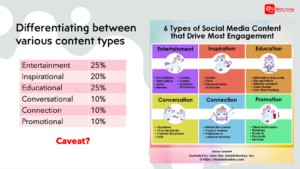
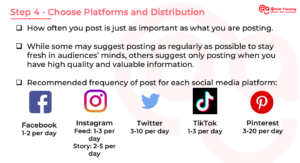
Using the template for contents planning, you should fill up the calendar for each of the platform that you intended to use to reach out to your audience. Do note the frequency of post to get the best effect on each of the platform. You may also consider the time of your post too. The mixture of the type of contents is also crucial so you can get the audience engaged with your brand.
Setting KPIs to track a Social Media Marketing Strategy
Key Performance Indicators (KPIs) are crucial to gauge the effectiveness of your social media marketing strategy. Here’s a list of KPIs you can track across various social platforms:
- Engagement Metrics:
- Likes/Reactions: Number of positive responses to your content.
- Comments: Number and nature of audience interactions.
- Shares/Retweets/Reposts: Indicates content virality.
- Click-Through Rate (CTR): Percentage of people who clicked on the content.
- Engagement Rate: Overall interaction (likes, comments, shares) relative to reach or impressions.
- Reach and Exposure Metrics:
- Reach: Total number of unique users who saw your content.
- Impressions: Total number of times your content was displayed on someone’s screen.
- Web Traffic Metrics:
- Referral Traffic: Number of visitors coming to your website from social platforms.
- Bounce Rate: Percentage of visitors who navigate away after viewing only one page.
- Pages per Session: Average number of pages a user views during a session.
- Session Duration: Average time a user spends on your site.
- Growth and Community Metrics:
- Follower Count: Total number of users following your account.
- Net Follower Growth: Rate at which your community is increasing or decreasing.
- Mentions: Number of times your brand or hashtag is mentioned by users.
- Conversion Metrics:
- Conversion Rate: Percentage of social media leads that complete a desired action, like making a purchase.
- Cost per Conversion: Total marketing cost divided by the number of conversions.
- Lead Generation: Number of leads generated from social media campaigns.
- Customer Loyalty and Satisfaction Metrics:
- Brand Sentiment: Overall audience feeling towards your brand, gauged from comments, mentions, and direct messages.
- Customer Testimonials: Positive feedback shared by customers.
- Customer Response Time: Average time taken to respond to a customer query or complaint.
- Content Performance Metrics:
- Content Shares: Number of times your content is shared.
- Top Performing Content: Content with the highest engagement or reach.
- Content Lifespan: Duration a piece of content continues to receive engagement.
- Revenue Metrics:
- Return on Investment (ROI): Net profit from social media campaigns divided by the total investment.
- Customer Lifetime Value: Projected revenue from a customer over their lifetime.
- Average Order Value: Average amount spent each time a customer places an order.
- Competitive Metrics:
- Share of Voice: Your brand’s mentions compared to competitors.
- Competitor Engagement Rate: Engagement rate comparison with competitors to benchmark performance.
- Competitor Growth Rate: Comparing follower growth rate with competitors.
It’s essential to align KPIs with your business objectives. Not all KPIs will be relevant for every campaign or strategy, so choose those that best represent your goals and provide actionable insights.
Responding to Customer Messages
You can use the platform below to create virtual interactions with customers.
https://fakeinfo.net/fake-whatsapp-chat-generator
There are various platform on which you can create the conversation between yourself and the customer. Have fun!